
Swasthya Mela
Problem Statement
Preventive Health care is as Important as neglected. The reason may be multifactorial but not having enough access to health and affordability is definitely a reason for such things. There is much-organized support for some selected disease conditions, but hardly any efforts promote preventive health. The only thing that they need is regular monitoring of some fundamental parameter—easy access to the qualified medical team to get guidance on healthy life, early diagnosis and treatment.
India spends 31 Billion USD every year to manage diabetes. More than50% of people with diabetes in India remain undiagnosed. The ratio of undiagnosed to diagnosed diabetes is higher in rural than urban areas. Looking at the economic burden, in India, diabetes alone exhausts 5 to 25% share of an average Indian household earning.
Hypertension is a silent, invisible killer. A survey of 26,000 adults in South India showed a hypertension prevalence of 20% (men 23% and women 17%). 67% of those with hypertension were unaware of their diagnosis. The majority of hypertensive subjects remain undetected, and the control of hypertension is also inadequate.
BMI help estimates the risk of Cardiovascular, Kidney, Diabetes. 1.2 million people died every year with either of this condition. Most importantly, 19 million survives with some form of physical disability.
53.2% and of which 45.1% were anaemic males and 54.6% anaemic females. Anaemia is widespread in India–58.6% of children, 53.2% of non-pregnant women and 50.4% of pregnant women were found to be anaemic in 2016, as per the NFHS. India carries the highest burden of the disease despite having an anaemia control programme for 50 years
Access to healthcare is significantly urban biased in India. Private healthcare is approachable for the poor. Medical expenditure impact household wellbeing—no access to proper preventive healthcare.
W2H2 Swasthya Mela can address a major part of these burning issues.
Program detail
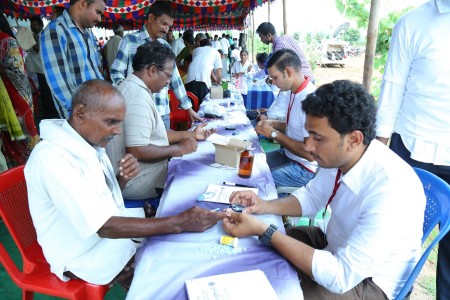
For a swasthya mela – a team of Doctor, Nurses, physiotherapist and paramedical volunteer – provide comprehensive consultation, basic investigations, awareness and orientation of the local population to digital health and some medication if needed. This is a day-long program and sometimes may need to stretch the program length depending on needs in that particular area.
What to expect from a Swasthya Mela
1. Measurement of BMI
2. Blood Pressure Check
3. Blood Sugar Check
4. Hb% Check
5. Hygiene Training
6. Nutrition guidelines
7. TB Awareness and Screening
8. Breast Cancer Awareness and Screening
9. Teen Age issues
10. Emotional Health Issues
11. Eye Checkup
12. Dental Checkup
13. Mother and Child Health
14. Geriatric Health
15. Medication where possible
16. Digital Health for follow-up treatment